

Locating underground utilities is one of the most important steps before digging, drilling, trenching, or starting any construction project. Every year, thousands of gas lines, water pipes, fiber cables, and electric lines are damaged because people dig without knowing what is buried beneath the ground. These accidents lead to expensive repairs, service outages, injuries, and sometimes fatal explosions.
Identifying underground utilities is not only good practice—it is required by law. Whether you are a homeowner planting a tree, a contractor digging for a foundation, or a utility company installing new service lines, you must locate underground utilities before breaking the ground.
This guide explains how to locate underground utilities, how much it costs, the steps for locating utilities yourself safely, and why accurate utility location helps prevent damage and delays.
Underground utilities in the United States include:
Water and sewer lines
Gas pipelines
Electric power cables
Internet and fiber-optic cables
Telephone lines
Storm drains
Some are shallow; others may be several feet deep. Hitting even one utility can cause:
Power outages
Water leaks and property flooding
Gas explosions
Internet and communication failures
Thousands of dollars in fines and repair charges
This is why utility locating is required under “Call Before You Dig” (811) rules in the United States.
There are several reliable ways to locate utilities before digging. Some methods are free, while others require professional help.
The easiest and safest way to locate underground utilities is to dial 811, the national “Call Before You Dig” number.
When you call:
Utility companies come to your property
They mark underground lines with colored paint or flags
The service is free for homeowners and contractors
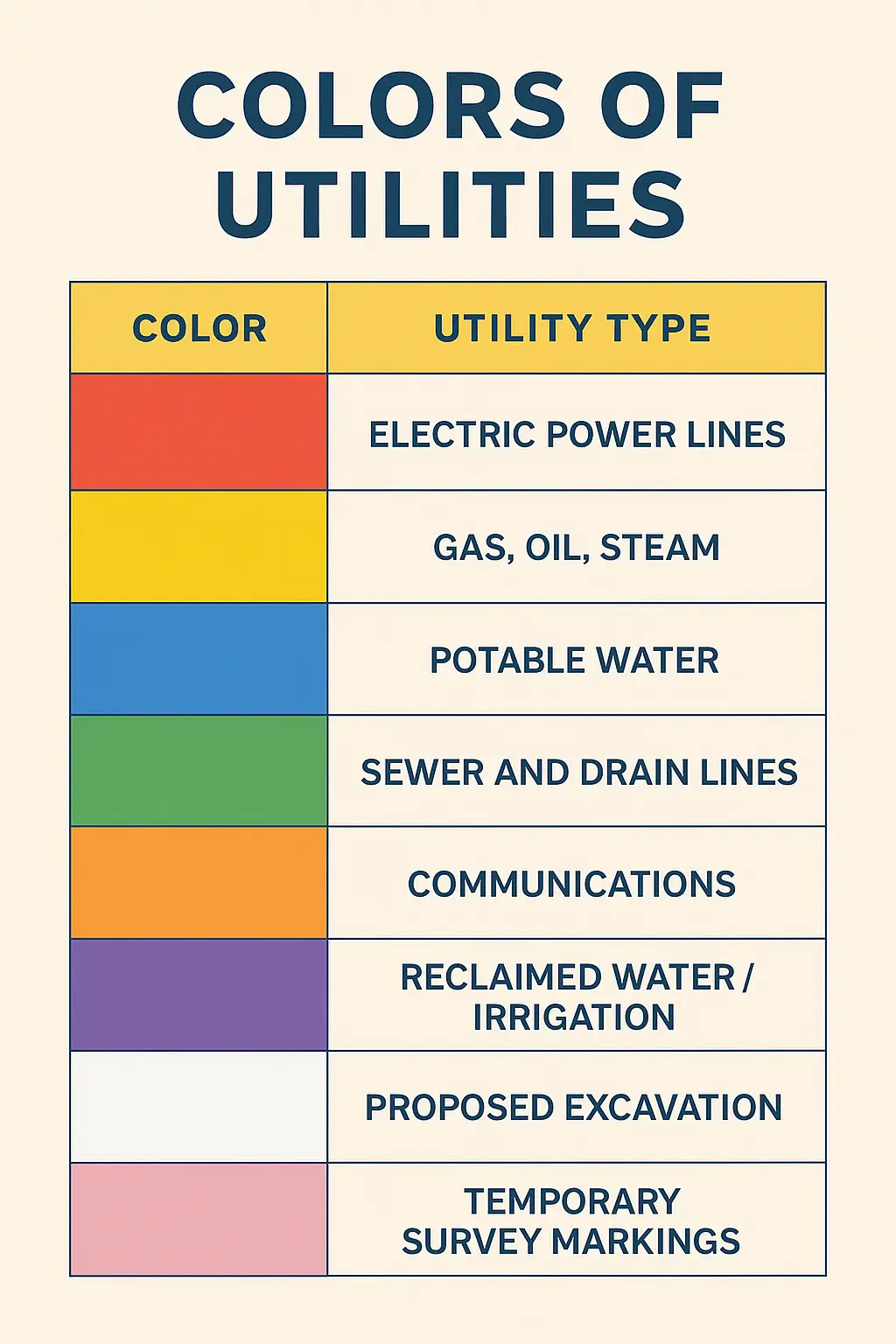
Color codes used in the U.S.:
Red – Electric lines
Yellow – Gas and oil
Blue – Water
Green – Sewer and drainage
Orange – Communications / Fiber
If you want to know how to locate underground utilities yourself, you can use utility locator tools. These tools send signals into the ground and detect metal pipes or cables.
Common DIY locating tools include:
Metal detectors
Electromagnetic locators
Ground-penetrating radar (GPR) (used more by professionals)
Magnetic locators
DIY locating is helpful but may not detect:
Plastic pipes
Deep utilities
Old abandoned lines
Fiber cables
Because of this, DIY tools are best for small projects.
811 marks only public utility lines—those owned by the utility companies. They do not mark:
Private gas lines
Private water lines
Irrigation pipes
Power lines to detached garages
Sewer lines beyond the main connection
Professional locating companies use advanced tools:
Ground-penetrating radar (GPR)
EM locators
Acoustic locating
Thermal imaging
These companies locate both public and private utilities with high accuracy.
| Color | Utility Type Marked | Meaning / What It Shows |
|---|---|---|
| Red | Electric Power Lines | Indicates buried electric cables, lighting wires, or high-voltage lines. |
| Yellow | Gas, Oil, Steam | Marks natural gas lines, oil pipelines, steam lines, and other flammable utility routes. |
| Blue | Potable Water | Shows the location of clean drinking-water pipes. |
| Green | Sewer and Drain Lines | Identifies sewer pipes, storm drains, and wastewater lines. |
| Orange | Communications | Used for fiber-optic cables, telephone lines, cable TV, and internet networks. |
| Purple | Reclaimed Water / Irrigation | Marks reclaimed or recycled water lines and irrigation pipes. |
| White | Proposed Excavation | Indicates where digging will take place; drawn by the excavator. |
| Pink | Temporary Survey Markings | Used by surveyors for measurements, boundaries, or layout points. |
Contact us today if you need a utility takeoff.
Utility locating costs in the U.S. depend on:
Property size
Number of utilities
Depth of utilities
Whether it is public or private locating
Type of equipment used
Below is a general cost estimate for the U.S. market.
Typical U.S. Utility Locating Costs:
| Service Type | Average Cost Range |
|---|---|
| 811 Public Utility Marking | Free |
| Private Utility Locating (Small Residential) | $150 – $400 |
| Private Locating (Large Property) | $400 – $1,200 |
| Ground Penetrating Radar (GPR) Survey | $300 – $1,000 per hour |
| Full Utility Mapping | $1,000 – $5,000+ |
Failing to locate utilities can lead to:
Gas leaks and fires
Broken electric lines
Flooded yards
Expensive repair bills
Legal penalties
Construction delays
Injury or death
In the United States, utility hits cost millions of dollars each year and are fully preventable.
| Utility Type | Typical Depth (U.S.) |
|---|---|
| Electric Lines | 18–36 inches |
| Water Pipes | 24–60 inches |
| Gas Lines | 18–48 inches |
| Sewer Lines | 24–72 inches |
| Fiber-Optic Cables | 18–30 inches |
| Project Type | DIY Tools | 811 | Private Locator |
|---|---|---|---|
| Planting small trees | ✔️ | ✔️ | Optional |
| Installing fence posts | ✔️ | ✔️ | Recommended |
| Building a shed or garage | ❌ | ✔️ | ✔️ |
| Digging trenches | ❌ | ✔️ | ✔️ |
| Commercial construction | ❌ | ✔️ | ✔️ |
| Excavation near gas lines | ❌ | ✔️ | ✔️ |
| Utility Type | Marked by 811 | Marked by Private Locator |
|---|---|---|
| City water line | ✔️ | ✔️ |
| Water line after the meter | ❌ | ✔️ |
| Gas company-owned pipeline | ✔️ | ✔️ |
| Gas line to pool heater or grill | ❌ | ✔️ |
| Cable line to house | ✔️ | ✔️ |
| Fiber line to outbuildings | ❌ | ✔️ |
Most states require utilities to respond within 48–72 hours.
Yes, you must follow state digging rules and maintain the marks.
Yes, heavy rain can fade paint, so you may need re-marking.
Some cities offer limited maps, but exact details are protected for safety reasons.
Depths vary by state code; there is no single nationwide depth rule.